Thinking about downsizing in Wake Forest? You are not alone, and this move is about much more than giving up a few rooms. For many homeowners, the real goal is simpler upkeep, easier daily living, and a home that better fits this next chapter. If you are weighing whether to stay, sell, or move into a lower-maintenance property, this guide will help you sort through your options and make a smart plan. Let’s dive in.
Why downsizing in Wake Forest makes sense
Downsizing in Wake Forest can be a practical lifestyle move because the town already offers services that support lower-maintenance living. The Town provides residential trash and recycling service for single-family homes, along with weekly yard-waste collection for single-family homes, duplexes, and select townhomes. Its monthly solid-waste fee also bundles services like bulk waste pickup, large brush pickup, seasonal loose-leaf collection, and Christmas tree collection.
That matters because lower-maintenance living is not only about the size of the home. It is also about how much time, energy, and money you want to spend on outdoor work, cleanup, and ongoing chores. In Wake Forest, local services can help reduce some of that load even before you choose a different property type.
For adults 55 and older, the Wake Forest Center for Active Aging adds another layer to the decision. Located at 235 E. Holding Ave., the center offers classes, social events, and wellness-focused programming, with membership open to people age 55 and older. That can make downsizing feel less like a reduction and more like a lifestyle shift.
What low-maintenance really means
A low-maintenance home does not always mean the same thing from one buyer to the next. For you, it might mean less yardwork, fewer stairs, a smaller floor plan, or help with exterior maintenance. The key question is who handles what.
In most move-down searches, low-maintenance homes fall on a spectrum:
- Smaller detached homes
- Attached townhomes
- Condo-style communities
- 55+ active-adult neighborhoods
Each option changes your responsibilities in a different way. Some reduce square footage but still leave you with lawn care and exterior upkeep. Others shift more of that work to a homeowners or condominium association, usually in exchange for monthly dues.
Compare your downsizing options
Smaller detached homes
A smaller detached home can be a good fit if you want less space without giving up privacy or a standalone property. You may still handle your own yard, roof, and exterior repairs, but the overall workload can feel more manageable if the lot and floor plan are smaller.
This option often works well if you want to stay in a traditional home setting while cutting back on rooms you no longer use. It can also be a middle-ground choice if you are not ready for shared walls or association-heavy living.
Townhomes in Wake Forest
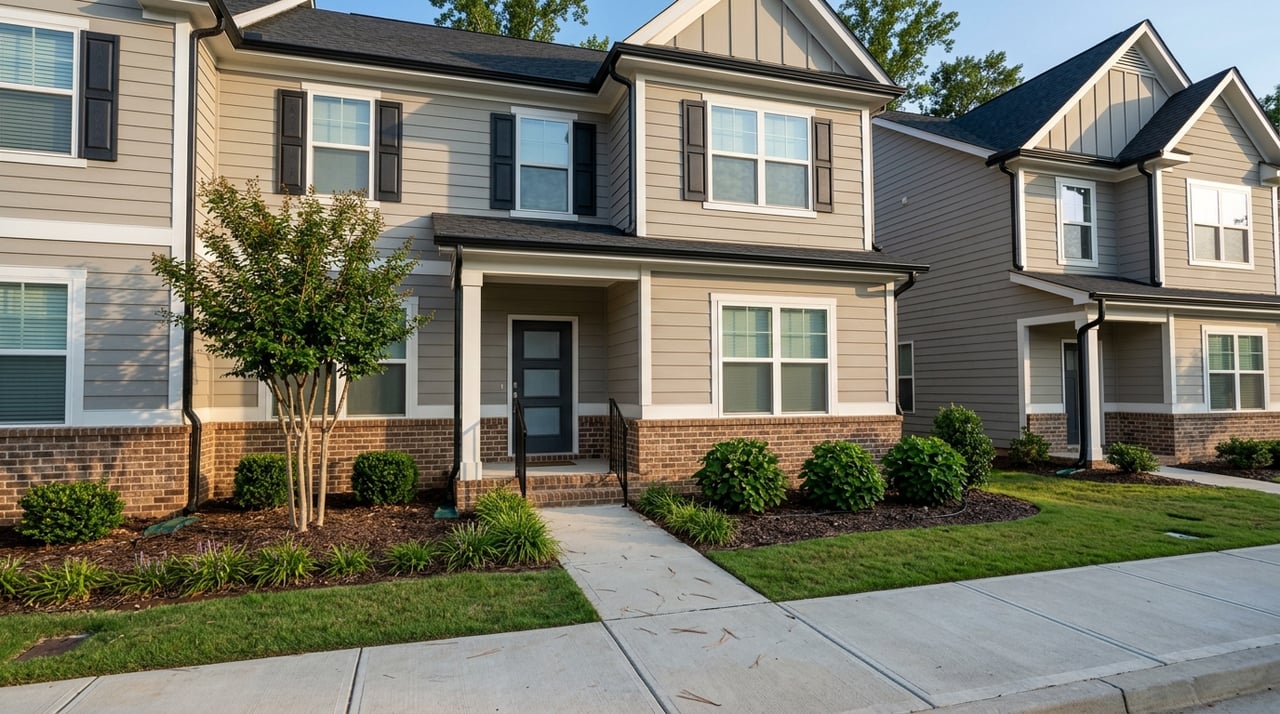
Townhomes are often one of the clearest paths to lower-maintenance living. In many communities, exterior upkeep and some landscaping are handled through the HOA, which can reduce your day-to-day to-do list.
Holding Village is one local example that helps show how this can work. The community includes new-build townhomes in Wake Forest and is positioned near downtown Wake Forest with access to Raleigh, Durham, and Chapel Hill. Because the broader development also includes single-family homes and apartments, it is a useful example of how you can compare different maintenance profiles while staying in the same general area.
Condo-style communities
Condo living can shift even more maintenance responsibility away from you, especially for exterior areas and shared spaces. That said, it is important to remember that condo ownership does not remove every responsibility. You still need to understand what the association covers and what remains your job.
The Villas of Wake Forest is a strong local example. It is a condominium owner-based community managed by York Properties, and owners can submit maintenance requests and work orders through the association. That setup may reduce direct responsibility for some tasks, but personal interior repairs still remain with the owner.
55+ active-adult communities
If you want a home that is designed around this stage of life, a 55+ community may be worth a closer look. These neighborhoods often focus on convenience, social connection, and amenities that support a more active, lower-maintenance lifestyle.
Del Webb at Traditions is listed under Wake Forest, and Del Webb describes its active-adult communities as centered on social connection, resort-style amenities, and home personalization. That makes this type of neighborhood different from a standard subdivision. You are not just choosing a smaller home. You are choosing a community built around a specific lifestyle.
Ask these questions before you move
Before you start touring homes, it helps to get clear on what you actually want to simplify. A home can be smaller and still feel high-maintenance if the upkeep does not match your goals.
Ask yourself:
- Do you want less yardwork or no yardwork?
- Are you comfortable paying HOA or COA dues for reduced upkeep?
- Do you want one-level living?
- How much storage do you still need?
- Do you want amenities or a quieter, simpler setup?
- Are you looking for a 55+ community or an all-ages neighborhood?
- How close do you want to be to downtown Wake Forest or regional routes?
Your answers help narrow the search faster. They also make it easier to compare homes based on maintenance profile, not just price or square footage.
Should you sell or improve and stay?
Downsizing is not always the right first step. In some cases, improving your current home may be enough to make it easier to live in and manage.
Wake Forest offers free housing support services through DHIC and Wake County Housing Affordability & Community Revitalization. These services include homeownership counseling, financial guidance, workshops, and connections to repair and stabilization programs. For qualifying homeowners inside town limits, the Housing Rehab Program may provide up to $20,000 in critical repair assistance.
If your current home could work with a few updates or repairs, it may be worth exploring those resources before you list. That is especially true if you like your location and want to delay a move while still reducing stress at home.
What to review before selling your current home
If you do decide to sell, preparation matters. In a downsizing move, the goal is not only to get your home on the market. It is also to make the transition smoother and protect your timing.
Start with the basics:
- Declutter early
- Decide which repairs are worth doing before listing
- Sort what you will keep, donate, sell, or discard
- Review HOA or COA documents if your current home is in an association
- Confirm any transfer requirements, dues, or timelines that could affect closing
This review is especially important if you are moving into another association-managed community. You want a clear picture of your current obligations and your future ones so there are fewer surprises.
Property tax relief may affect your timing
If you are an older homeowner or a homeowner with a qualifying disability, North Carolina property-tax relief rules may be relevant as you plan your move. For tax year 2026, Form AV-9 must be filed by June 1 with the county tax assessor.
The elderly or disabled exclusion applies to a permanent residence and requires that the owner be at least 65 or totally and permanently disabled. It uses a 2026 income limit of $38,800. North Carolina also offers a circuit breaker program that limits taxes to 4% or 5% of income depending on income level, but deferred taxes remain a lien and can become due if the owner dies, transfers the property, or no longer uses the home as a permanent residence.
There is also a disabled-veteran exclusion that can remove the first $45,000 of appraised value, with no age or income limit. Because a sale or move can affect how these benefits apply, it is smart to review them before making a final timeline.
What the Wake Forest market means for downsizers
Wake Forest remains an active market, even though exact numbers vary by source and methodology. Recent snapshots show an average home value of $515,280, a median sale price of $490,000 in May 2026, and homes selling for about 99% of list price on average in May 2026. Another local takeaway is that homes have been going pending in about 18 days on average.
The most practical takeaway is simple: well-priced homes still move. If you are downsizing, that can support either a sell-then-shop or shop-then-sell strategy, depending on your equity, your comfort with timing, and the type of home you want to buy next.
A thoughtful plan matters here because lower-maintenance homes can appeal to many kinds of buyers, not just downsizers. If you are aiming for a townhome, condo, or 55+ community, it helps to understand inventory and act with a clear strategy.
Build your downsizing plan step by step
A calmer move usually starts with a clear sequence. Instead of trying to solve everything at once, break the process into a few manageable decisions.
A simple approach looks like this:
- Define what low-maintenance means to you
- Decide whether staying and improving is still an option
- Review your budget, equity, and monthly cost comfort level
- Compare detached homes, townhomes, condos, and 55+ communities
- Prepare your current home for sale
- Build a timeline for selling and buying
When you move through those steps in order, your next home becomes easier to spot. You stop chasing square footage alone and start focusing on how you actually want to live.
Downsizing in Wake Forest is not about settling for less. It is about choosing a home with the right maintenance profile, the right level of support, and the right fit for your daily life. If you want help weighing your options, planning the sale of your current home, or comparing low-maintenance neighborhoods in Wake Forest, Caroline Numbers can guide you through the process with clear, personal support.
FAQs
What does low-maintenance living in Wake Forest usually mean?
- Low-maintenance living in Wake Forest usually means choosing a home where upkeep is reduced by smaller space, less yardwork, association-managed exterior tasks, or a community designed for easier day-to-day living.
What types of homes are best for downsizing in Wake Forest?
- The main options are smaller detached homes, townhomes, condo-style communities, and 55+ active-adult neighborhoods, each with a different mix of privacy, upkeep, and monthly association costs.
Are townhomes in Wake Forest easier to maintain than detached homes?
- In many cases, yes. Townhomes often include HOA-managed exterior maintenance or landscaping, which can reduce your personal upkeep compared with a detached home.
Can condo living in Wake Forest reduce homeowner responsibilities?
- Yes, condo communities can reduce direct responsibility for some exterior and common-area tasks, but you still need to review what the association covers and what repairs remain your responsibility.
Are there 55+ communities in Wake Forest for downsizers?
- Yes. Del Webb at Traditions is one Wake Forest example of a 55+ active-adult community designed around social connection, amenities, and a lifestyle-focused approach.
Should you fix up your current Wake Forest home before downsizing?
- Possibly. Some homeowners may benefit from improving and staying, or making targeted repairs before listing, especially since Wake Forest offers free housing support services and qualifying homeowners may access repair assistance through the Housing Rehab Program.
What should Wake Forest sellers review before moving to a low-maintenance home?
- You should declutter, decide which repairs are worth making, and review any HOA or COA documents early so you understand dues, maintenance responsibilities, and transfer requirements that could affect timing and proceeds.
How active is the Wake Forest market for downsizers selling a home?
- Recent market snapshots suggest Wake Forest remains active, with well-priced homes still moving, which can support either a sell-first or buy-first strategy depending on your timeline and finances.