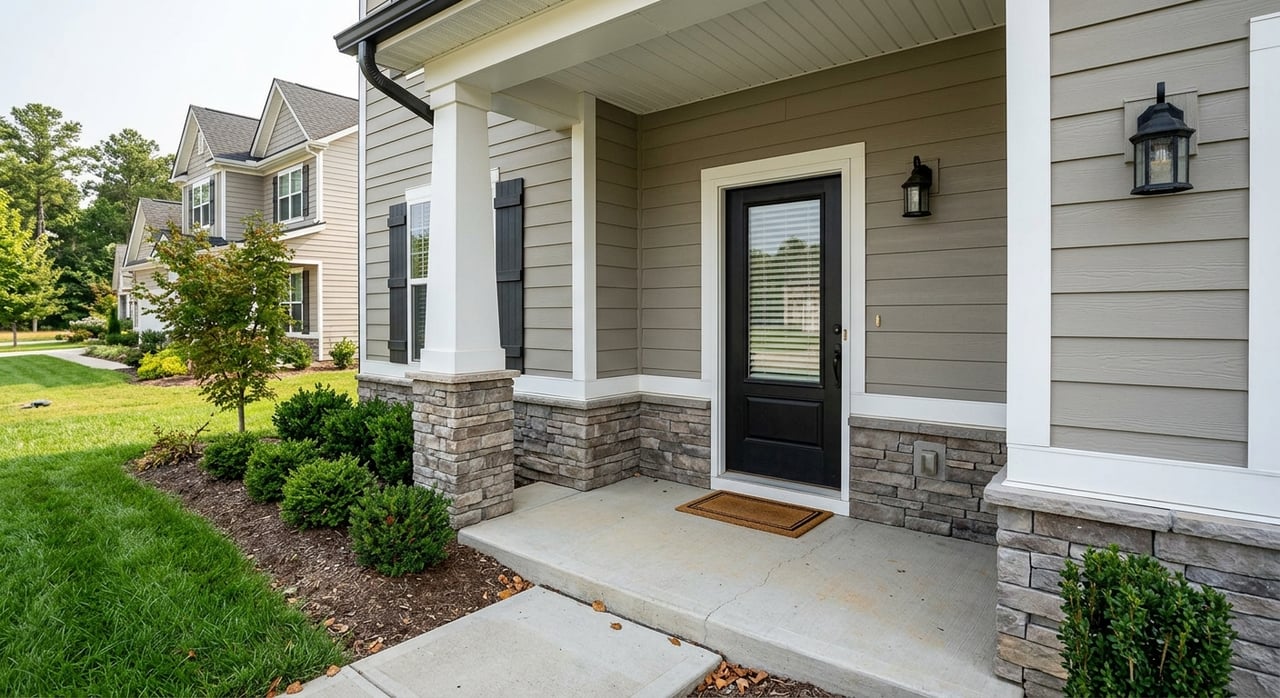
If you are looking at Wake Forest rentals, the big question is simple: are you buying for cash flow today, long-term value tomorrow, or a mix of both? That matters more than ever in a market where prices remain relatively high, rents are solid but not explosive, and vacancy is present enough to reward careful planning. The good news is that Wake Forest still offers strong fundamentals for patient investors and homeowners thinking about holding instead of selling. Let’s dive in.
Wake Forest market snapshot
Wake Forest continues to stand out as a growth market within Wake County. According to the U.S. Census QuickFacts for Wake Forest, the town’s 2024 population estimate was 56,764, up 18.2% from April 2020. The same source reports median household income at $123,802 and an owner-occupied housing rate of 74.0%.
Those numbers help explain why the area gets attention from both buyers and investors. A growing population, strong household income, and high owner occupancy often point to a market with durable housing demand. In Wake Forest, that creates a useful backdrop for long-term rental property decisions.
Home values also remain elevated. Census QuickFacts reports a median owner-occupied home value of $474,500, while Zillow’s Wake Forest market data showed a March 2026 home value index of $512,161. That pricing level is one reason many investors see Wake Forest as more of an appreciation play than a high-cash-flow market.
What rents look like now
When you evaluate rental potential, it helps to compare the right data points. Zillow reported an average asking rent in Wake Forest of $1,787 per month as of March 31, 2026, while Census QuickFacts shows a 2020-2024 median gross rent of $1,596. These figures are not interchangeable because one reflects asking rents and the other reflects rents actually being paid.
That difference matters when you build a realistic pro forma. Asking rents show what landlords are trying to achieve in the current market, while paid-rent data gives you a broader picture of where occupied units have landed. If you are pricing a new rental, you should treat these as reference points, not guarantees.
Local rent distribution also gives helpful context. On the ACS-derived local demographic page cited in the research, about 70.2% of renters paid between $1,000 and $1,999 per month, while about 16.3% paid $2,000 or more. In practical terms, that suggests the market’s core demand still sits in the mid-range rather than the luxury tier.
Vacancy matters more than headlines
One of the most important details for Wake Forest investors is vacancy. The ACS-derived local page shows overall housing occupancy at 95.51% occupied and 4.49% vacant, but more targeted rental indicators suggest a more competitive leasing environment. A Town of Wake Forest board packet reported an average multifamily vacancy rate of 8.4% in December 2025, and HUD’s Wake County housing market report estimated an overall rental vacancy rate of 8.5% and an apartment vacancy rate of 11.1% in Q3 2025.
That does not mean the rental market is weak. It means property type, condition, pricing, and management matter. In a market with noticeable vacancy and thousands of rental units under construction countywide, the best-performing properties are often the ones that match local demand most closely and lease well without aggressive concessions.
Best property types for Wake Forest investors
For many small investors, detached homes and townhomes may offer the clearest path to stable demand. The Town of Wake Forest’s 2025 population and buildout estimate used 99.1% occupancy for owner-occupied condominiums, townhomes, and single-family homes, compared with 90% for apartments based on 2024 CoStar occupancy assumptions.
That is not a direct return forecast, but it is still useful local context. Lower-density housing appears to be treated as the more stable occupancy class, while apartments may face more lease-up pressure. If you want less operational sensitivity, that distinction matters.
Wake Forest’s demographics help explain why. The same town data shows 26.5% of residents are under age 18, average household size is 2.81, and 59.5% of adults age 25 and older hold a bachelor’s degree or higher. Those traits tend to support demand for practical floor plans, especially 3-bedroom homes and townhomes, rather than smaller unit types.
Why homes and townhomes may fit better
If you are choosing between a condo-style unit, an apartment investment, or a low-density home, think about renter usability. Many renters in Wake Forest are likely looking for space, flexible rooms, storage, and a layout that works for longer stays. A well-located single-family home or townhome often checks those boxes more easily than a smaller apartment-style property.
This does not mean apartments cannot perform. They can, especially if you want scale or prefer professionally managed assets. But based on the current vacancy data, apartments appear more sensitive to competition, which can affect pricing power and lease timing.
Cash flow vs appreciation in Wake Forest
Wake Forest currently looks stronger for long-term value potential than for immediate cash flow. Using Zillow’s average rent and home value figures, the gross rent-to-value ratio is about 4.19%. Using Census median gross rent and median owner-occupied value, the ratio is about 4.04%.
Those are modest numbers for investors focused on monthly income. Census QuickFacts also reports median monthly owner costs with a mortgage at $2,272, compared with median gross rent of $1,596. That $676 gap does not represent a true investor payment comparison, but it does highlight how tight the math can feel when purchase prices are high.
For that reason, financing and basis are critical. If you buy at full market value with standard borrowing terms, your monthly margin may be thin after taxes, insurance, maintenance, vacancy, and management. If you buy below market, bring more cash, or already own at a lower basis, the picture can improve.
Why long-term value still looks compelling
Even with tighter cash flow, Wake Forest has several long-run demand drivers. Population growth remains strong, household income is high, and owner occupancy is elevated. Those are healthy signs for long-term housing demand.
The resale market also remains active. According to Zillow’s local market page, homes were going pending in about 37 days. That suggests the market still has liquidity, which is helpful if you eventually want to sell or refinance.
At the same time, this is not a straight-up market. Zillow also shows Wake Forest home values down 1.8% over the past year, a median sale-to-list ratio of 0.984, and 77.4% of sales closing under list price. For investors, that can be good news because it may create room to negotiate better entry terms.
Should you keep your current home as a rental?
If you already own a home in Wake Forest, you may be wondering whether it makes more sense to rent it out instead of selling. In this market, the strongest hold scenarios often involve a home with a low mortgage rate, manageable upkeep, and carrying costs that stay close enough to achievable rent.
That is especially true for homes that fit the area’s likely renter profile. A clean, well-maintained 3-bedroom home or townhome may attract more stable interest than a property with an unusual layout or heavy maintenance demands. The easier the home is to lease and maintain, the easier it may be to justify a longer hold period.
On the other hand, if your monthly cost is far above likely market rent or the property needs frequent repairs, selling may still be the cleaner financial move. This is where a local rent analysis and resale review become very useful before you commit.
How to evaluate a Wake Forest rental
Before you buy or hold, focus on the numbers and the fit.
Start with these metrics
- Likely asking rent, based on current competing listings and not just older lease comps
- Real carrying costs, including taxes, insurance, maintenance, HOA if applicable, and vacancy
- Property type risk, especially whether the home competes with new apartment supply
- Layout and bedroom count, with extra attention to practical 3-bedroom options
- Negotiation potential, since many current sales are closing below list price
Ask these practical questions
- Is this property more likely to win on stability or on raw rent?
- Would a renter choose this home over nearby alternatives?
- Is the condition strong enough to reduce turnover costs?
- If appreciation slows, does the hold still make sense?
- If you already own it, is the monthly gap manageable enough to keep it?
A smart approach for this market
Wake Forest can make sense for rental investing, but usually with the right expectations. It looks less like a high-yield cash flow play and more like a market where patient investors may benefit from stable demand, strategic property selection, and long-term value growth. Detached homes and townhomes appear especially well positioned relative to more vacancy-sensitive apartment inventory.
If you want to buy, hold, or compare selling versus renting in Wake Forest, local guidance can save you from making a decision based on the wrong rent number or the wrong property type. Caroline Numbers can help you evaluate current market conditions, estimate realistic rental positioning, and build a plan that fits your goals.
FAQs
What is a realistic monthly rent for a Wake Forest rental home?
- Current data shows Wake Forest asking rent at $1,787 per month on Zillow, while Census median gross rent is $1,596, so your realistic range depends on property type, condition, and competition.
Are apartments or houses riskier for vacancy in Wake Forest?
- Current local and county data suggest apartments face more vacancy pressure than lower-density homes, with apartment vacancy estimated at 11.1% in Wake County versus more stable occupancy assumptions for townhomes and single-family homes.
Is Wake Forest better for cash flow or appreciation?
- Based on current prices and rents, Wake Forest appears more favorable for long-term appreciation potential than for strong immediate cash flow.
Should you keep your Wake Forest home as a rental instead of selling?
- It may make sense if you have a low basis, manageable maintenance, and carrying costs that are reasonably close to likely market rent.
Which rental property type may appeal most in Wake Forest?
- Local demographic and occupancy patterns suggest 3-bedroom single-family homes and townhomes may align well with Wake Forest renter demand.