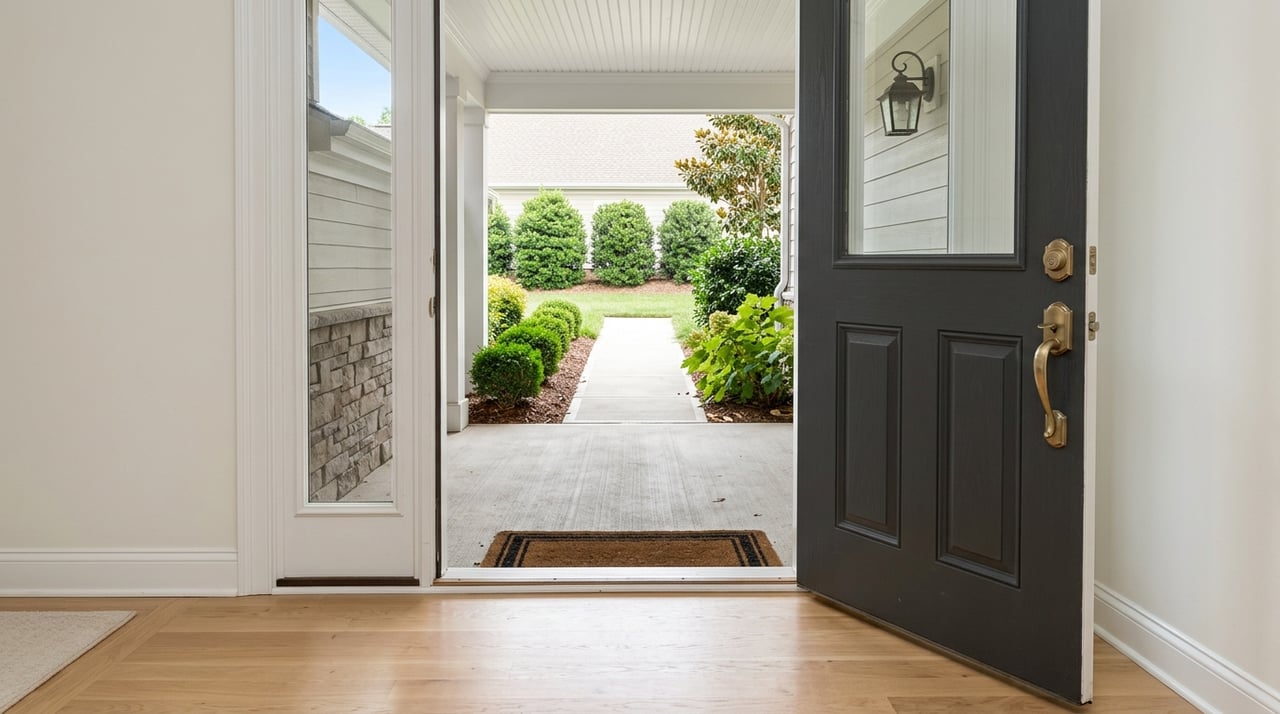
Relocating to Raleigh can feel exciting and overwhelming at the same time. You may be trying to compare renting versus buying, learn North Carolina rules, and line up a move from another state without missing a beat. This guide will help you understand your main housing options, what Raleigh pricing looks like today, and the smartest next steps to take before you commit. Let’s dive in.
Raleigh housing at a glance
If you are moving to Raleigh, it helps to start with the big picture. Recent market data points to a purchase market in the mid-$400,000s, with Raleigh home values and sale prices clustering around the low-to-mid $400,000s.
Zillow reported a typical Raleigh home value of $433,996 and a median sale price of $421,917. Redfin reported a Raleigh median sale price of $420,000 in March 2026. On the rental side, Zillow showed about 1,915 available rentals in Raleigh with an average rent of $1,840 per month.
Wake County trends are a little higher overall. Zillow showed a typical home value of $479,727 and median sale price of $450,000 in Wake County, while Redfin reported a median sale price of $468,245. The exact numbers vary by source and timing, but the broader message is clear: this is an active market where planning matters.
Raleigh affordability depends on submarket choice
One of the biggest decisions you will make is not just Raleigh versus somewhere else. It is which part of the Raleigh area best fits your budget and timeline.
Within Wake County, Raleigh sits below Cary, Apex, and Wake Forest on Zillow’s typical home value measure. It sits above Garner, Knightdale, and Wendell. That means your housing costs can shift quite a bit depending on where you focus your search.
If you are open to nearby communities, you may be able to create more flexibility in your budget. If you need a specific commute pattern or move-in date, narrowing the search early can save time and stress.
Renting first can buy you flexibility
Renting first is often the best move when your relocation timeline still has a few unknowns. It gives you time to learn commute routes, compare housing options in person, and decide what part of the area feels right for your daily life.
This path can be especially helpful if you are starting a new job, arriving before the rest of your household, or trying to time a later home purchase. With Raleigh rents averaging around $1,840 per month based on Zillow’s recent market page, a short-term rental can serve as a practical bridge while you get settled.
Renting first also lowers the pressure to buy quickly in a market that still rewards preparation. Instead of rushing into a purchase, you can move with a clearer understanding of pricing, availability, and what matters most to you.
Buying right away works best with certainty
Buying immediately can make sense if you already know you plan to stay in the area and you are ready to move quickly when the right home appears. This option usually works best when your job, budget, and move timing are already firm.
If you choose this route, it is important to understand that North Carolina has a process that may feel different from other states. One key part is the due diligence period, which gives you time to investigate the property and the transaction before closing.
According to the North Carolina Real Estate Commission, buyers often use this period for home inspections, pest inspections, septic review if needed, surveys, appraisal, title search, loan qualification, and repair negotiations. The due diligence fee is negotiated, credited at closing, and is generally forfeited if you terminate before closing.
Another important difference is the closing process. In North Carolina, a licensed North Carolina attorney must supervise a residential real estate closing. If you are relocating from a state with a different system, this is one of the first process changes to understand.
New construction can help with timing
New construction is not just a style choice. For many relocators, it is really a timeline and contract decision.
If your move date is several months away, a new build may give you a better chance to line up completion with your relocation. That can be appealing if you want a home that is closer to move-in ready and you have time to wait for construction.
Still, builder contracts deserve close attention. The North Carolina Real Estate Commission notes that builder and relocation-firm contracts may be less flexible about closing time and place, and some incentives may be tied to using a designated closing attorney.
That means you should look carefully at the contract before committing. Incentives can be helpful, but it is smart to understand any strings attached, how much control the builder keeps over timing, and what happens if completion shifts.
Even with new construction, inspections still matter. NCREC and the Home Inspector Licensure Board support using a licensed home inspector, and NCREC recommends re-inspection if repairs are completed before closing.
Temporary housing helps when dates do not line up
Sometimes the best option is a short-term one. Temporary housing can help when your closing date, lease end date, household goods delivery, or reporting date do not line up neatly.
This can be a useful bridge for corporate relocations and military moves. It gives you a place to land while you finalize your long-term housing plan without making a rushed decision.
For military households, Military OneSource describes PCS housing options as including government-owned or privatized military housing, off-base rentals, and privately owned homes. It also points service members to installation housing offices and relocation planning resources.
Military OneSource and DTMO also note that BAH is based on local civilian housing costs, but it is not designed to cover every housing expense. For some CONUS PCS moves, Temporary Lodging Expense may partially reimburse lodging and meal costs, and some eligible service members can request housing flexibility from 180 days before to 180 days after the PCS date.
Virtual tours are useful, but not enough by themselves
If you are moving from out of state, virtual tours can save time and help you narrow your list fast. They are a valuable tool, but they work best as part of a structured buying plan rather than a replacement for due diligence.
The National Association of Realtors notes that live virtual tours count as tours when you are working with an agent, and that floor plans can help you understand room flow and dimensions. High-quality photos and video also matter because you want the home in person to match what you saw online.
A smart remote-buying strategy usually starts broad and then gets more detailed. You can use online search tools and video tours to narrow choices, then rely on inspections, reports, and local guidance before making your final decision.
Inspections matter even more for remote buyers
When you cannot be there in person for every step, inspections become even more important. In North Carolina, home inspectors must be licensed individually through the Home Inspector Licensure Board.
NCREC advises that buyers and brokers should verify the inspector’s license, review the full report, and arrange specialized follow-up inspections when needed. It also notes that a VA appraisal is not a substitute for a home inspection.
Timing matters here too. If your inspection report or specialty work will not be completed before the due diligence deadline, you may need to request an extension in writing if the seller agrees.
If repairs are made before closing, a re-inspection is wise. And if you cannot attend the inspection in person, getting the full report before the due diligence period expires is especially important.
A simple next-step plan for relocating buyers
If you want to keep your move organized, follow a step-by-step process. The goal is to match your housing choice to your level of timing certainty.
If your timeline is still fluid
- Compare rent costs, temporary housing, and purchase costs side by side
- Focus first on commute patterns and target areas
- Consider renting first while you learn the market
- Keep your purchase search active so you can move when the timing is right
If you are ready to buy soon
- Get preapproved before you start touring seriously
- Narrow your search by budget, location, and move-in date
- Schedule live virtual tours if you are out of state
- Review North Carolina due diligence terms early
- Line up inspection planning before you go under contract
- Prepare for an attorney-supervised closing
If you are considering new construction
- Confirm whether your timeline can absorb delays
- Review builder incentives carefully
- Ask how the closing process will be handled
- Plan for inspection and possible re-inspection before closing
How to choose the right path
There is no one-size-fits-all answer for relocating to Raleigh. The best path depends on how certain you are about your timeline, budget, and long-term plans.
If you need flexibility, renting or temporary housing may be the smartest first step. If your job and timeline are stable, buying now could help you settle in faster. If you have time and want a later move-in, new construction may be worth a closer look.
The good news is that you do not have to sort through those choices alone. With local guidance, clear communication, and a step-by-step plan, you can make a move that feels informed instead of rushed.
Whether you are relocating for work, military orders, or a fresh start, having the right support can make the process much easier. If you want personalized help comparing neighborhoods, rentals, resale homes, or new construction in the Triangle, schedule a free consultation with Caroline Numbers.
FAQs
What is the average rent in Raleigh for relocating renters?
- Recent Zillow data showed an average Raleigh rent of $1,840 per month, with about 1,915 rentals listed on its market page.
What are Raleigh home prices like for relocating buyers?
- Recent market data placed Raleigh home values and sale prices around the low-to-mid $400,000s, with sources reporting roughly $420,000 to $433,996 depending on the metric used.
What is due diligence in a North Carolina home purchase?
- In North Carolina, due diligence is the buyer’s investigation period for inspections, appraisal, title work, financing, and repair discussions, and the due diligence fee is typically credited at closing but generally forfeited if the buyer terminates before closing.
Do North Carolina home closings require an attorney?
- Yes. North Carolina requires a licensed North Carolina attorney to supervise a residential real estate closing.
Should out-of-state buyers rely only on virtual tours in Raleigh?
- No. Virtual tours are helpful for narrowing options, but they should be combined with inspections, full reports, and due diligence before you commit to a purchase.
Are inspections important for Raleigh new construction homes?
- Yes. NCREC and the Home Inspector Licensure Board support using a licensed home inspector for new construction, and re-inspection is recommended if repairs are completed before closing.
What housing options should military families compare when relocating to Raleigh?
- Military households may compare temporary housing, off-base rentals, government-owned or privatized military housing, and privately owned homes, while also reviewing BAH, PCS flexibility, and possible TLE support for eligible moves.