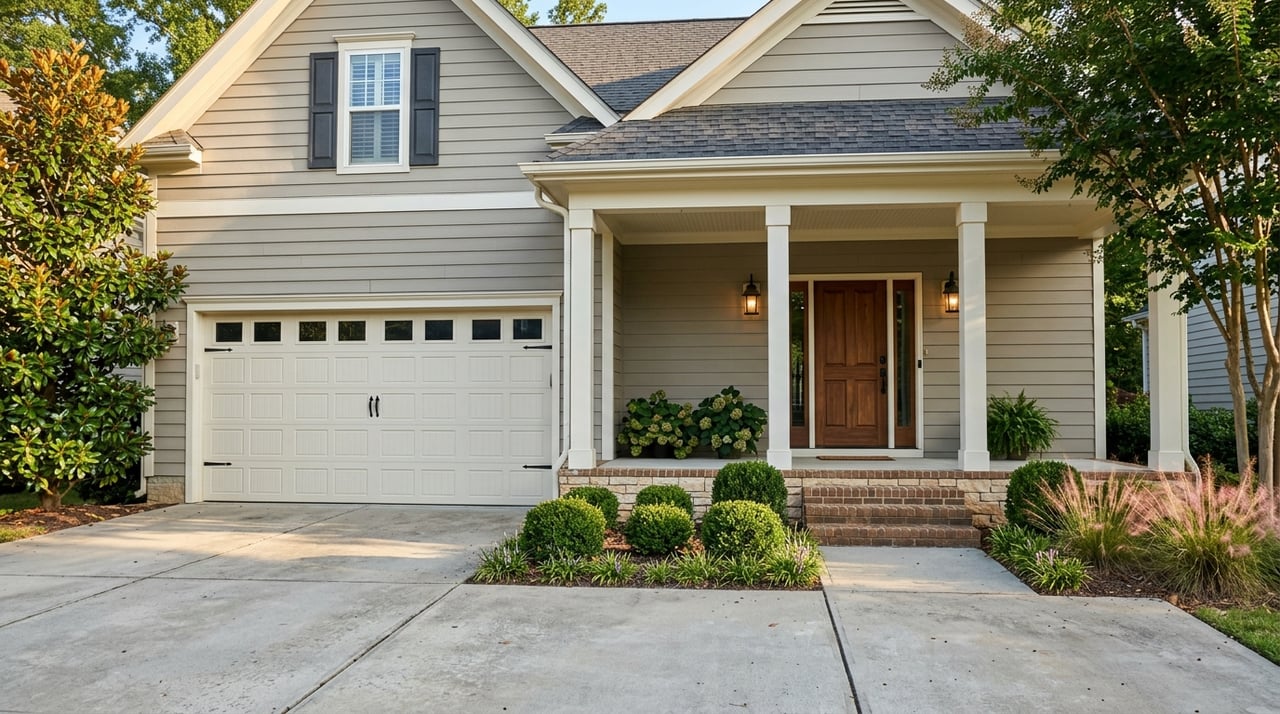
If you are torn between a brand-new home and an older neighborhood in Wake Forest, you are not alone. This is one of the few Triangle towns where you can seriously compare new master-planned communities, townhome developments, historic districts, and long-established residential areas all in the same market. Understanding how those options differ can help you choose a home that fits your budget, lifestyle, and comfort level with upkeep. Let’s dive in.
Why this choice matters in Wake Forest
Wake Forest is still growing quickly, and that growth shapes the home search. The town’s 2024 population is 56,764, which is up 18.2% from 2020, and local planning documents describe an active development pipeline.
That matters because Wake Forest does not offer just one housing experience. Instead, you will find newer communities with modern layouts and amenities, alongside older sections of town with established streets, varied architecture, and a stronger sense of historical layering.
Wake Forest also sits in a middle position in the Triangle’s suburban price picture. The median value of owner-occupied homes is $474,500, and the owner-occupied housing rate is 74.0%, which helps explain why buyers often see it as a place with both variety and relative balance.
What new construction looks like
New construction in Wake Forest is not one-size-fits-all. According to the town’s community plan, newer housing can range from attached homes and multifamily options to detached single-family homes on roughly 10,000- to 20,000-square-foot lots.
In real terms, that means your choices may include a compact townhome, a detached home in a planned subdivision, or a larger-lot property in a more spacious setting. The type of neighborhood you want will often be just as important as the home itself.
New communities offer varied formats
Recent and current developments show how broad the selection can be. Holding Village is a 257-acre master-planned community built around a 15-acre lake, with up to 1,350 residential units including townhomes, single-family homes, and apartments.
Other examples highlight different priorities. Rosedale offers single-family homes and townhomes from the $300s, while Grand Highland Estates features larger homesites ranging from 0.9 to 2.6 acres. The Townes at Prestleigh focuses on townhome living with amenities such as a pool, cabana, playground, dog park, and greenway connection.
New homes often mean HOA living
One of the biggest practical differences with newer communities is the presence of a homeowners association. In North Carolina, many subdivisions with HOAs created after January 1, 1999 fall under the North Carolina Planned Community Act.
For you, that means it is important to read the bylaws and covenants carefully before you buy. Architectural changes may need association approval, and monthly HOA dues are typically a separate housing cost that should be part of your budget from day one.
Lower maintenance does not mean no maintenance
A major reason buyers choose new construction is the hope of fewer repairs right away. That is often true, especially compared with an older home that may have aging systems or deferred maintenance.
Still, a new home is not maintenance-free. Builder warranties can reduce some of the early uncertainty, but they may not cover every out-of-pocket cost tied to a defect after closing. It is smarter to think of new construction as lower immediate maintenance, not zero responsibility.
What established areas look like
Established areas in Wake Forest can feel very different from newer subdivisions. Instead of newer streetscapes and repeated floor plans, you may find mature lots, older homes with varied designs, and neighborhoods that reflect different parts of the town’s history.
This is especially noticeable near Wake Forest’s historic core. The town identifies four historic districts: the Wake Forest Historic District, the Glen Royall Mill Village Historic District, the Downtown Wake Forest Historic District, and a local historic district centered on North Main Street and part of South Avenue.
Historic districts bring character and rules
If you are drawn to older architecture, Wake Forest offers plenty to explore. The Wake Forest Historic District includes the original Wake Forest College campus and surrounding residences, with architecture dating from about 1820 to 1953.
The local historic district on North Main Street includes examples of many American architectural styles from 1820 to 1956. In these areas, exterior changes may require a Certificate of Appropriateness, so it is important to understand the review process before planning major updates.
Established homes vary beyond historic districts
Not every older home in Wake Forest sits in a formal historic district. Some established neighborhoods offer a more modest, practical version of older housing without the same level of preservation oversight.
The Northeast Neighborhood Plan gives a useful example. It describes a residential area with 503 single-family homes and an average home size of about 1,200 square feet, showing that established housing in Wake Forest can also mean smaller homes, simpler layouts, and a more traditional neighborhood feel.
Older homes usually need a repair mindset
If you buy in an established area, you should expect more personal responsibility for upkeep. Homeownership always includes maintenance, but older homes are more likely to bring repairs tied to roofs, plumbing, windows, or aging systems.
Wake Forest does offer local support through Housing Support Services and a Housing Rehab Program. For qualifying owner-occupants, the town says assistance of up to $20,000 may be available for critical repairs, which is an important local resource to know about.
Lifestyle differences to think through
The right choice often comes down to how you want to live day to day. Newer communities may offer amenities, uniform design standards, and newer floor plans, while established areas may offer architectural variety, older trees, and proximity to downtown or historic areas.
Neither option is automatically better. The better fit is the one that matches how much maintenance you want to manage, how much HOA structure you are comfortable with, and whether you value newer finishes or older character more.
Downtown access and established charm
For some buyers, the pull of older Wake Forest is really about the setting. Downtown Wake Forest is described as a carefully preserved historic district with independent shops, restaurants, frequent events, and more than 200 surrounding acres in revitalization.
If you want to be closer to that kind of environment, established parts of town may be especially appealing. The appeal is less about getting a newer house and more about living near a recognizable town center with a long-standing identity.
Budgeting for new versus older homes
Budget is about more than the listing price. In Wake Forest, planning documents cited a 2021 average sale price of $513,204 for new homes compared with $462,774 for older homes built before 2010.
That gap is historical rather than current, but it reinforces a pattern many buyers already expect. Newer homes often command a premium for updated condition, while older homes may start at a lower price point and then require repair or renovation funds.
Compare total monthly cost
When you compare homes, look beyond the purchase price and mortgage payment. A new townhome with HOA dues may have fewer immediate repair costs, while an older single-family home without an HOA may leave more room in your monthly budget but require more savings for maintenance.
A simple comparison can help:
| Home type | Common cost pattern | Key question |
|---|---|---|
| New construction | Higher purchase price, possible HOA dues, lower early maintenance | Do you want predictability and newer features? |
| Established home | Potentially lower starting price, more repair risk, possible update costs | Are you comfortable budgeting for upkeep and improvements? |
This kind of side-by-side thinking can keep you from focusing too narrowly on the list price alone.
How Wake Forest compares nearby
If you are also looking at other Triangle suburbs, Wake Forest has an interesting position. Its median owner-occupied home value of $474,500 is below Cary, Apex, Holly Springs, Rolesville, and Morrisville, but above Raleigh.
That gives Wake Forest a useful middle ground for many buyers. You can still find a broad range of housing types here, including newer construction and established neighborhoods, without being at the very top of the suburban pricing spectrum.
Housing mix matters too. Nearby towns differ in owner-occupied rates, which can shape neighborhood feel, turnover, and the kind of housing stock you will see. In that sense, buying in Wake Forest is not just about choosing old or new. It is also about choosing the type of neighborhood structure that feels right for you.
Questions to ask yourself first
Before you narrow your search, it helps to get honest about your priorities. In Wake Forest, the new-versus-established choice usually comes down to a few simple questions.
Ask yourself:
- How much maintenance do you want to handle yourself?
- Are you comfortable with HOA dues and community rules?
- Do you prefer modern layouts and new-home warranties?
- Do you want architectural character or a more uniform neighborhood design?
- Is being closer to downtown or historic areas important to you?
- Do you have room in your budget for repairs, updates, or both?
Your answers will usually point you in the right direction faster than browsing listings alone.
The bottom line on Wake Forest homes
Wake Forest gives you a rare mix of options inside one town. You can choose a newer community with amenities and lower immediate maintenance, or you can focus on established areas with character, history, and a different kind of everyday experience.
The best move is not chasing a trend. It is choosing the home and neighborhood structure that fit your budget, comfort level, and long-term plans. If you want help comparing new construction with older neighborhoods in Wake Forest, Caroline Numbers can help you sort through the tradeoffs and find the right fit.
FAQs
What is the main difference between new construction and established neighborhoods in Wake Forest?
- New construction often offers newer layouts, possible amenities, and HOA-managed communities, while established neighborhoods often offer older homes, more architectural variety, and different maintenance expectations.
Are many new homes in Wake Forest part of an HOA?
- Yes. Many newer Wake Forest communities are HOA-managed, so you should review dues, bylaws, and covenants carefully before buying.
Do established Wake Forest homes always sit in historic districts?
- No. Some older homes are in historic districts, but many established neighborhoods are outside those districts and may not have the same preservation rules.
Is new construction in Wake Forest always more expensive?
- Not always, but Wake Forest planning documents cited higher average sale prices for new homes than for older homes in 2021, which reflects the common premium buyers pay for newer condition.
What should Wake Forest buyers budget for with an older home?
- You should plan for ongoing maintenance and the possibility of larger repairs or updates, especially for older systems or exterior components.
Why do some buyers prefer established areas near downtown Wake Forest?
- Many buyers like the historic setting, independent shops, restaurants, frequent events, and the character that comes with an older part of town.