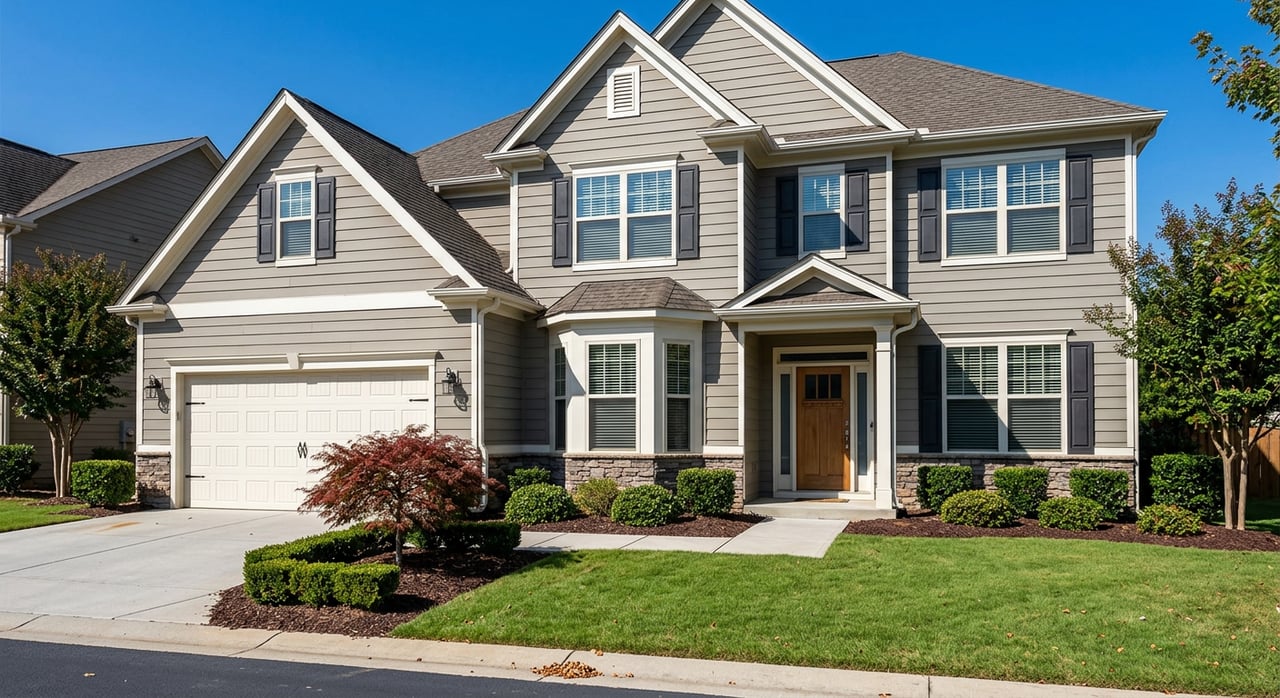
You know Wake Forest is the right fit. Now you’re trying to figure out which neighborhood gives you the best first home for your budget and lifestyle. That choice can feel overwhelming when prices and options vary from block to block. In this guide, you’ll see clear neighborhood picks for walkability, amenities, commute value and price, plus what to verify before you write an offer. Let’s dive in.
Wake Forest market snapshot
Wake Forest offers a wide range of prices. As of January 2026, Zillow’s local value index points to a typical value near $504,000, while Redfin’s recent median sale price shows about $440,000. Different methods create different numbers, so plan around a broad range of about $400,000 to $520,000 rather than a single target. Homes have typically taken 6 to 8 weeks to go under contract in recent months, which can give first-time buyers more room to negotiate.
If you are comparing rent to buy, Zillow reports observed average rent around $1,700 to $1,800 per month as of January 2026. That figure helps you frame monthly payments when you run scenarios with your lender.
Start with your priorities
Use these three simple paths to focus your search:
Walkable downtown living
Choose this if you want cafés, restaurants and the farmers market a short stroll away. Downtown and Olde Wake Forest offer condos and townhomes often in the low to mid $200,000s to around $350,000, plus small single-family homes that often start in the mid $300,000s, depending on condition and location. Many houses are older with small lots, porches and original details. Explore the town’s downtown map and events to get a feel for daily life in historic Downtown Wake Forest. Commute times to downtown Raleigh vary widely by route and time; expect roughly 25 to 40 minutes off-peak. Always confirm by address.
Amenities and schools access
If you want trails, pools and organized community spaces, look at Heritage and nearby Traditions pockets. Heritage spans many home types from townhomes that can start in the low $200,000s up through higher priced single-family homes. Neighborhood-level data shows Heritage medians in the mid $400,000s, but the internal mix is wide. Traditions has historically offered more entry-level options within the greater Heritage area. Most addresses here include homeowners associations that cover amenities, so factor dues into your monthly budget. Schools are assigned by Wake County Public Schools, and assignments vary by street.
Commute value and lower price points
If your top goal is value with straightforward access to US 1 toward Raleigh, focus on Northeast Wake Forest and Holding Village. Neighborhood medians for these areas often land in the lower to mid $300,000s, with homes from the 1980s through the 2000s. HOA expectations are modest or even absent in many subdivisions, which can keep monthly costs predictable. Check your exact rush-hour route using mapping apps and review local road connections described in the Wake Forest overview.
Neighborhood snapshots
Downtown and Olde Wake Forest
- Fit: You want walkability to shops, restaurants and the farmers market.
- Price signals: Condos and townhomes often low to mid $200,000s to around $350,000. Smaller single-family homes often mid $300,000s and up, depending on condition and updates (January 2026 context).
- Home age: Early 20th century through mid-century. Expect smaller lots and older systems that may need updates over time.
- Commute: Variable to Raleigh, often 25 to 40 minutes off-peak. Confirm by address.
- HOA: Standalone historic homes often have no HOA. Condos and townhomes usually do.
- Daily life: Browse local dining, events and maps on the town’s downtown page.
Heritage (plus nearby Traditions/Regency)
- Fit: You want built-in trails, pools and parks with a large master-planned feel.
- Price signals: Heritage’s mix ranges widely. Neighborhood-level stats show medians in the mid $400,000s, with some townhomes and smaller resales starting lower. Traditions has historically shown more entry-level options within this area.
- Home age: Mostly 2000s to 2010s construction.
- Commute: Straightforward access to US 1 and NC 98 toward Raleigh and Cary.
- HOA: Expect associations and amenity dues. Confirm what each sub-association covers.
- Schools & services: Local schools and daily shopping are in or near the neighborhood. Confirm school assignment by address with WCPSS.
Northeast Wake Forest and Holding Village
- Fit: You want value pricing with access to US 1.
- Price signals: Often in the lower to mid $300,000s (January 2026 context), which draws many first-time buyers.
- Home age: Mix of 1980s through 2000s subdivisions with smaller yards and practical layouts.
- Commute: Check AM/PM drive times to your workplace and preferred routes.
- HOA: Many pockets have minimal or no HOA dues. Always verify on a per-address basis.
Wakefield Plantation and similar golf areas
- Fit: You want larger homes or golf and club-style amenities.
- Price signals: Neighborhood medians often upper $400,000s to $600,000s. Some smaller townhomes can come in lower, so watch for resales.
- Home age: Largely 1990s to 2000s construction with higher-end suburban design.
- HOA: Expect associations, amenity structures and possible club fees.
Higher-end enclaves to know
- Context: Hasentree and Stonegate often sit well above town averages. These are useful reference points, but they may be outside typical first-time budgets.
Budget planning tips
- Work from a range. With Zillow’s typical value near $504,000 and Redfin’s median sale near $440,000 as of January 2026, you can set a working range of $400,000 to $520,000 and refine by neighborhood.
- Use rent as a benchmark. Average observed rent of about $1,700 to $1,800 per month (January 2026) helps you compare to an estimated mortgage, taxes, insurance and HOA.
- Factor HOA dues. Amenity neighborhoods like Heritage and golf communities include dues. Get current amounts and what they cover for each address.
- Explore assistance. North Carolina programs may lower your upfront costs. Review down payment and first-time options with the North Carolina Housing Finance Agency.
What to verify before you offer
- School assignment. Confirm attendance area by address with the Wake County Public School System. Boundaries can shift and may vary by street.
- Property taxes. Look up current tax details through town and county resources linked from the Town of Wake Forest. Tax amounts change with assessed value and jurisdictions.
- HOA rules and fees. Request the CC&Rs, current dues, budget and meeting minutes. Clarify coverage for pools, greenways, landscaping and any special assessments.
- Commute time. Test AM and PM drive times from the exact address. Wake Forest connects to Raleigh via US 1 (Capital Boulevard) and NC 98, as noted in the town overview.
- Market context. Your agent can pull MLS data for recent sales and days on market so you understand pricing and leverage in your chosen pocket.
- Financing programs. Review state-level resources with the North Carolina Housing Finance Agency and compare lender options to see how assistance affects monthly payments.
How to compare neighborhoods quickly
Use this fast checklist when you tour:
- Walkability or amenities: Do you prefer downtown cafés or a neighborhood pool and trails?
- Typical list prices: Are active listings in your target range this month?
- Age and upkeep: Are you comfortable with older systems and smaller lots, or do you want newer builds and HOA-maintained spaces?
- Commute: Can you live with the peak-time drive and your preferred route options?
- Monthly costs: Add mortgage, taxes, insurance and HOA dues to get a true monthly number.
Next steps
When you are ready, pair these insights with on-the-ground tours and fresh MLS data. As a first-time buyer, you will benefit from patient education, quick updates on new listings and a coordinated team for lending, inspections, title and insurance. If you want a warm, concierge-style process with one point of contact who handles the moving pieces, let’s talk. Caroline Numbers brings local guidance across the Triangle and an integrated Long & Foster network to keep your first purchase clear and coordinated from search to close.
FAQs
What are typical Wake Forest home prices for first-time buyers in 2026?
- As of January 2026, expect a broad range around $400,000 to $520,000 based on differing measures like Zillow’s local value index (about $504,000) and Redfin’s recent median sale (about $440,000).
Which Wake Forest area is best for walkability without a high price?
- Downtown and Olde Wake Forest offer the highest walkability, with condos and townhomes often in the low to mid $200,000s to around $350,000 and small single-family homes often in the mid $300,000s, depending on inventory.
Are HOA fees common in Heritage and similar communities?
- Yes. Heritage and many master-planned or golf communities use HOAs to fund pools, trails and shared maintenance, so confirm current dues and coverage for each subdivision.
Where can I find lower prices with a straightforward commute?
- Northeast Wake Forest and Holding Village often show neighborhood medians in the lower to mid $300,000s and offer access to US 1 toward Raleigh. Verify your exact rush-hour route.
How do I confirm my assigned schools for a specific Wake Forest address?
- Use the Wake County Public School System address lookup to confirm current assignments, since boundaries can change and may vary by street.
Are there down payment programs for North Carolina first-time buyers?
- Yes. Review current options with the North Carolina Housing Finance Agency and compare with your lender to see how assistance affects cash to close and monthly payment.
Where can I learn more about downtown amenities and events?
- The Town’s downtown page shares maps, events and local businesses so you can preview daily life in Downtown Wake Forest.